The Sovereignty Paradox: Why Europe’s Tech Orchard is Bearing Plastic Fruit
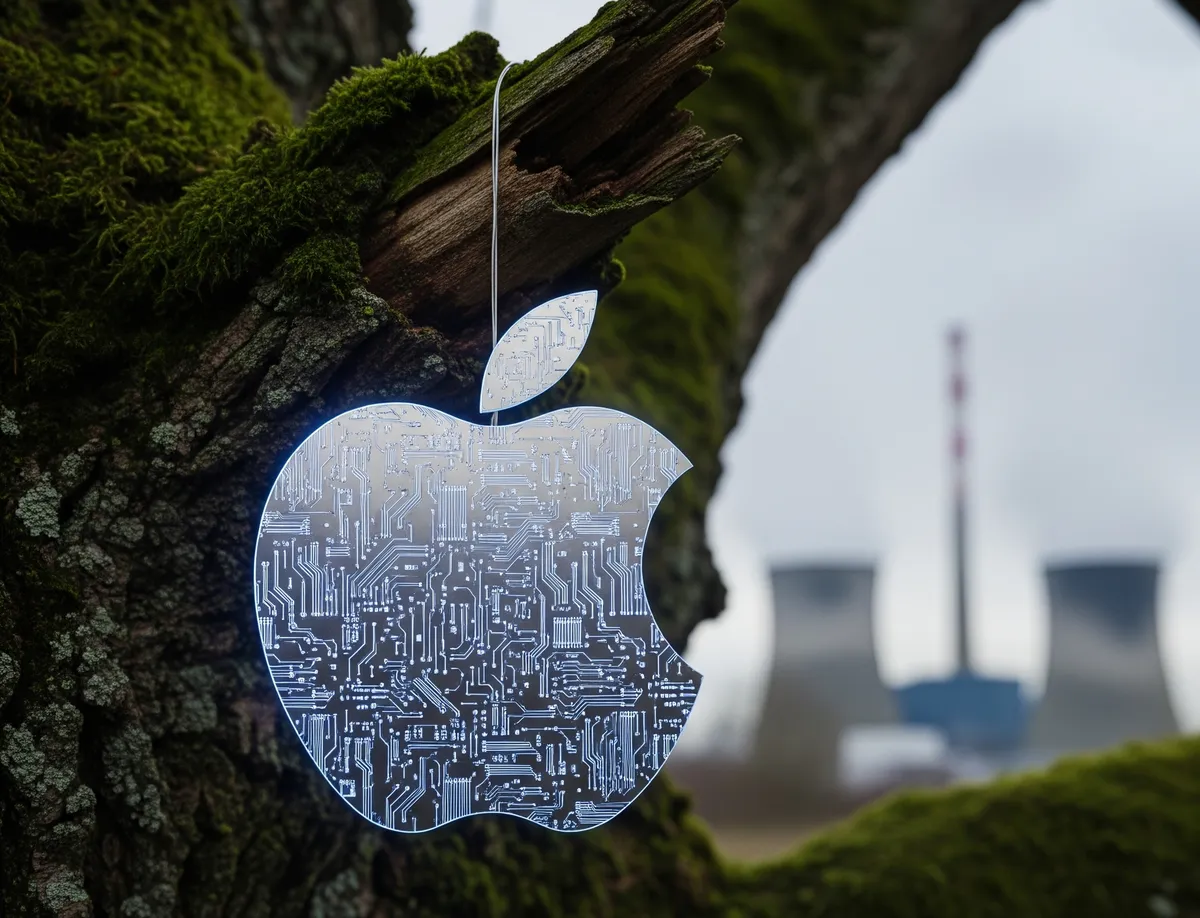
There is a specific kind of irony in watching a gardener scream at a withered stump for failing to produce apples, especially when that gardener is the one who cut the roots twenty years ago.
Lately, the halls of European power have been vibrating with a new buzzword: Digital Sovereignty. Prompted by the shifting tectonic plates of global geopolitics, European governments are suddenly obsessed with “European Supremacy” in IoT, cloud infrastructure, and semiconductors. With the 2026+ budgets being drafted, the mandate is clear: decouple from foreign tech and build a fortress Europe.
As an engineer who has spent decades in the trenches of infrastructure, I find this push both fascinating and deeply tragic. Because while the intent is noble, it ignores a fundamental law of systems: Ecosystems cannot be mandated; they must be cultivated.
The 20-Year Lag: A History of Missed Connections
The narrative in Brussels suggests that Europe is merely in a temporary slump. The reality is that we are witnessing the result of a twenty-year divergence in how we value risk. While the “Wild West” of the US and the state-accelerated engine of China were pouring billions into high-risk, high-reward platforms, Europe was perfecting the art of the Roadblock. We didn’t have a Silicon Valley because we never created the seeding ground.
The Venture Capital Chasm
In 2023, US venture capital investment reached approximately $170 billion. Europe, despite a comparable GDP, managed roughly $45 billion [1]. But the raw numbers only tell half the story. The nature of the capital is different.
- The Equity Gap: In the US, the legal framework of Chapter 11 bankruptcy and the cultural acceptance of failure encourage founders to swing for the fences.
- The European Fortress: In Germany, the GmbH (Gesellschaft mit beschränkter Haftung) structure is designed for stability, not velocity. It is expensive to enter and administratively heavy to exit. A failed startup in Germany is often viewed as a permanent stain on a professional reputation, whereas in the Valley, it is a badge of experience.
We are not just “catching up” on code; we are trying to catch up on two decades of accumulated institutional risk-taking.
The Precautionary Principle: Regulating the Void
One of the most significant hurdles in this journey is the Precautionary Principle—the cornerstone of Article 191 of the Treaty on the Functioning of the European Union. It states that if an action has a suspected risk of causing harm, the burden of proof that it is not harmful falls on those taking the action.
In food safety or environmental protection, this is a virtue. In Machine Learning or Edge Computing, it is a death sentence. Tech is, by definition, an iterative process of breaking things and fixing them. By regulating AI (The EU AI Act) and data (GDPR) to the point of “Day Zero” perfection, we have ensured that European builders spend 70% of their time on compliance and 30% on the stack. Meanwhile, our competitors are doing the inverse. The lawmakers are asking for fruit from a tree they refuse to let grow because they are afraid of the shape of the leaves.
The Lithography Paradox: We Own the Eyes, but Not the Hands
To understand the absurdity of “European Supremacy,” we have to look at the “Metal.” The most advanced microchips in the world are made using Extreme Ultraviolet (EUV) Lithography. There is only one company that makes these machines: the Dutch giant ASML.
But ASML is a systems integrator. The “Eyes” of these machines—mirrors polished to such a precision that if they were the size of Germany, the highest bump would be less than 0.1mm—are made by Zeiss in Oberkochen, Germany. The “Soul” of the machine—the high-power CO2 lasers that create the EUV light—are made by Trumpf in Ditzingen, Germany [4].
Europe produces the critical sub-components that make modern computing possible. We own the optics that can see the atomic level. Yet, because we lack the end-to-end industrial ecosystem—the Foundries—we ship these German mirrors and Dutch machines to TSMC in Taiwan. We then pay a premium to import the finished chips back to Europe to power our “Sovereign” projects.
We own the ingredients, and we even built the oven, but we forgot to build the kitchen.
The “Foundry Gap”: The Chemical and Energy Crisis
Running a modern foundry like TSMC’s “Fab 18” is an infrastructure marathon. Even if we had the machines, Europe’s current regulatory and energy environment makes fabrication a non-starter.
- Ultra-Pure Chemistry: High-end chips require a specialized chemical supply chain. However, the EU is currently pushing for broad bans on PFAS (per- and polyfluoroalkyl substances)—the “forever chemicals” that are absolutely essential for semiconductor etching and cooling. Without a specific, long-term exemption for the “Metal,” European sovereignty is dead on arrival.
- The Neon Supply Chain: Following the 2022 invasion of Ukraine, Europe lost access to roughly 50% of the world’s semiconductor-grade Neon gas (produced primarily in Mariupol and Odesa). While we scramble for “sovereign” alternatives, the US and Asia have already secured diversified pipelines.
The “Boring” Infrastructure: The Nuclear Divergence
Sovereignty in 2026 isn’t just about AI; it’s about the baseload. You cannot have a high-tech future if your industrial base is priced out of the market by its own energy policy.
We are seeing a massive divergence here. US-based hyperscalers are now reviving dedicated nuclear power plants. Microsoft recently signed a 20-year deal with Constellation Energy to restart Three Mile Island Unit 1 [6], and Amazon acquired a campus powered by Talen Energy’s Susquehanna plant.
The contrast with Germany is striking. In 2011, Japan—an island nation on the Pacific Ring of Fire—responded to the Fukushima disaster with pragmatic engineering, like implementing “Great Forest Walls” as tide breaks. Germany—situated on a stable tectonic plate—responded by dismantling its entire nuclear baseload.
While it is popular to blame the Green Party, the records show it was the CDU/CSU-led government under Angela Merkel that executed the definitive 2011 U-turn (Atomausstieg). This came only months after her own government had passed a law to extend the life of the plants (the Laufzeitverlängerung of 2010), proving that German energy policy was driven by emotional optics rather than engineering reality. By dismantling its baseload without a mature “Next-Gen” replacement, Europe has effectively capped the growth of its own foundry capacity. A 3nm fab requires gigawatts of ultra-stable power; you cannot run a sovereign silicon industry on intermittent weather patterns alone.
The Case Study: The European Processor Initiative (EPI)
The EPI is the flagship attempt to fix this. Launched in 2018, it aims to design the “Rhea” chip.
The irony here is multi-layered. While it is a “European” design, the first generations rely on ARM Neoverse-V1 cores—a blueprint fundamentally tethered to foreign IP. More importantly, because Europe lacks a leading-edge foundry capable of sub-7nm production, the “Sovereign” Rhea chip must be manufactured by TSMC in Hsinchu. We are designing a house with a foreign blueprint and hiring a foreign builder, then calling it “Home Grown” because we provided the window glass from Zeiss.
The Architect’s Pivot: The Rapid Failure Model
Is it too late? No. But the solution isn’t another €40 billion grant or another 500-page regulation. In software development, we value Rapid Failure. We deploy, we break, we extract telemetry, and we iterate. If Europe wants sovereignty, it must apply this “Developer Mindset” to its entire geopolitical strategy:
- Reward the Extraction of Knowledge: We must stop punishing failed ventures. In a sovereign ecosystem, a failed AI startup should be seen as a successful extraction of “what doesn’t work,” and the founders should be rewarded with their next round of capital immediately.
- Vertical Integration: The subsidies for Intel in Magdeburg are a start, but they must be backed by a massive deregulatory push in energy and industrial chemicals (PFAS exemptions).
- From Precaution to Permissionless Innovation: If we want an orchard, we have to allow the trees to grow, even if they look messy.
True sovereignty doesn’t come from a gold seal on a piece of paper. It comes from agency. It comes from having a population of builders who have the capital, the legal freedom, and the cultural support to fail ten times before they change the world.
Hard Facts & References
- [1] Venture Capital Disparity: The State of European Tech 2023. (Atomico Report).
- [2] Foundry Capex: TSMC Annual Report 2024. Highlighting the $30B+ annual investment required for leading-edge nodes.
- [3] The European Chips Act: Official Journal of the European Union (2023/1781).
- [4] EUV Optics & Lasers: ASML, Zeiss, and Trumpf: The Trio of the Impossible. (ASML Corporate, 2024).
- [5] EPI Project Status: European Processor Initiative: Progress Report on Rhea Generation 1. (EPI Consortium, 2025).
- [6] Nuclear Revival: Microsoft and Constellation Energy: The Three Mile Island Restart Agreement. (Bloomberg/CNBC, Sept 2024).
- [7] The Nuclear Phase-out Timeline: German Federal Government (Bundesregierung): History of the 2011 13th Amendment to the Atomic Energy Act.