The Analog Ghost: Numbers Stations and the Architecture of Absolute Trust
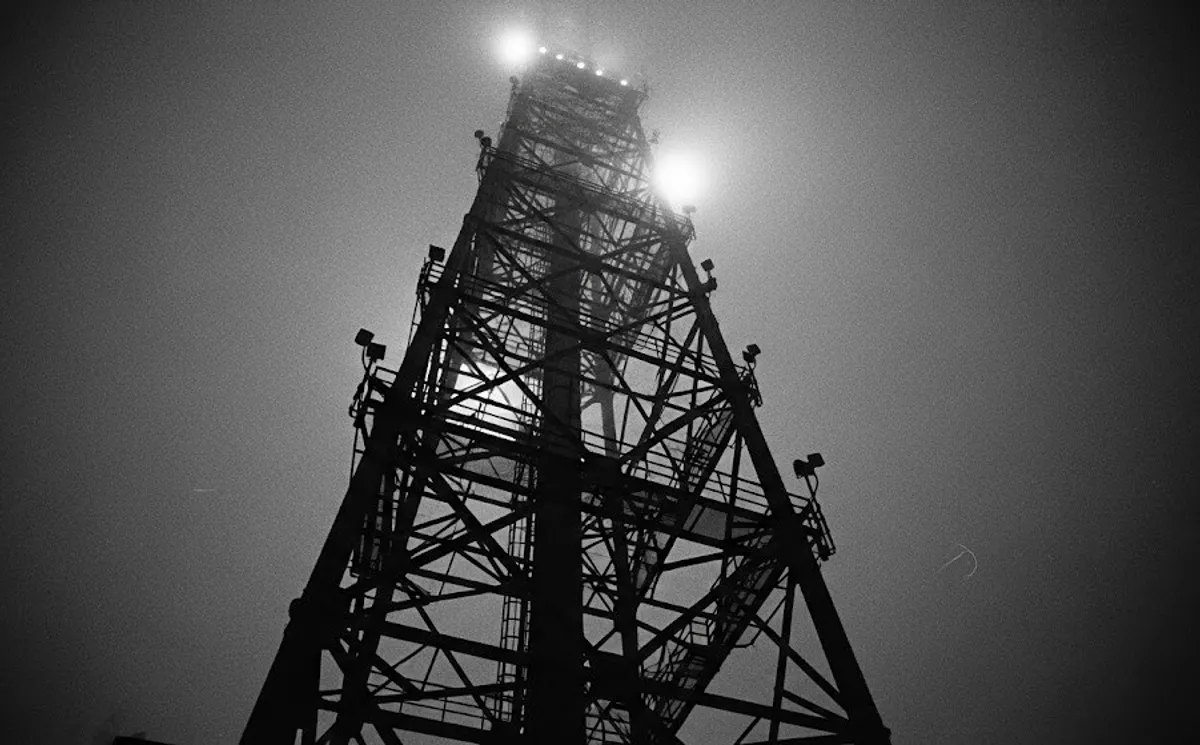
In the world of modern infrastructure, we are taught that “Security through Obscurity” is a fallacy. We build firewalls, enforce mTLS protocols, and hide our internal services behind strict Zero Trust network boundaries. Yet, the most successful and resilient clandestine communication system in human history—the Numbers Station—operates on the exact opposite principle: maximum, unencrypted visibility.
This paradox relies on the Asymmetry of Attribution. In a modern digital network, simply establishing a connection is a liability. A single packet routed to a rogue IP creates a metadata trail—a handshake, a MAC address, a timestamp—that can be forensically traced. But if a state intelligence agency broadcasts a synthesized voice reading a string of numbers at 100 kilowatts from a high-power shortwave transmitter, they are reaching millions of square kilometers simultaneously.
To a counter-intelligence observer, the signal is the equivalent of shouting in a crowded stadium. Because anyone with a $20 consumer radio can hear it, the broadcaster effectively masks the intended recipient in a sea of innocent listeners. You cannot distinguish a deep-cover operative tuning in from a hotel room from a hobbyist listening in their garage.
But shouting across a continent requires a very specific manipulation of physics.
The Mechanism: Weaponizing the Ionosphere
Numbers stations do not rely on undersea cables, BGP routing tables, or line-of-sight cell towers. They utilize the Shortwave (High Frequency or HF) spectrum, spanning from 3 to 30 MHz. This specific band interacts with the Earth’s atmosphere in a way that enables global, untethered transmission through Skywave Propagation.
When a shortwave signal is directed upward, it doesn’t punch through into space. Instead, it hits the F-layer of the ionosphere (roughly 200 to 400 kilometers above the Earth’s surface) and refracts, bouncing back down to the ground. This “skip” can cover thousands of kilometers in a single bound.
However, the ionosphere is not a static mirror; it is a fluid, highly irradiated layer of gas that changes with the solar cycle and the time of day. To maintain a reliable link to an agent, station operators must calculate the Maximum Usable Frequency (MUF) and the Lowest Usable Frequency (LUF).
- During the day, solar radiation highly ionizes the atmosphere, absorbing lower frequencies. Stations must broadcast at higher frequencies (e.g., 14-20 MHz).
- At night, the lower D-layer of the ionosphere dissipates, meaning those higher frequencies will shoot straight into space. Stations must drop to lower frequencies (e.g., 3-7 MHz) to successfully achieve the “skip.”
By mastering these atmospheric physics using massive, industrial antenna arrays (often built by firms like Telefunken), state actors created a global, physical broadcast grid. To understand how this physical grid was weaponized for statecraft, we only need to look at the divided landscape of Cold War Europe.
The Stasi’s ‘Gong’ and the Human Variable
The DDR (East Germany) operated one of the most prolific and mathematically rigorous Numbers Station infrastructures in the world. Run by the **HVA (Hauptverwaltung Aufklärung)**—the foreign intelligence wing of the Stasi—these broadcasts were the primary lifeline to deep-cover operatives, including the infamous “Romeo” agents placed within West German government circles.
The most recognized HVA station was designated G03 by Western monitors, commonly known as “The Gong.”
The Analog Workflow of an Operative
The operational security (OPSEC) of a G03 agent was incredibly low-friction. At a pre-arranged time and frequency, the agent would turn on a standard, unmodified consumer shortwave receiver—often a Sony or Panasonic, leaving no forensic evidence of specialized spy gear.
The broadcast would begin with a rhythmic, synthesized gong, acting as a channel marker. Then, a synthesized, mechanical female voice (generated by a machine known as the “Sprach-Morse-Generator”) would begin reading groups of five digits in German: “Achtung… Fünf, zwo, null, null, eins…”
The agent would write these numbers down on a piece of paper. To decrypt the message, they would retrieve their **One-Time Pad (OTP)**—often printed on highly flammable or water-soluble cellulose paper, sometimes disguised as a matchbook or hidden in a false-bottomed shaving cream can. After mathematically decoding the message, the agent would destroy the pad and the message, leaving zero trace of the payload.
The Systemic Failure: The Werner Stiller Defection (1979)
The HVA’s system was mathematically flawless, but it suffered from the ultimate architectural vulnerability: the human in the loop.
In 1979, Werner Stiller, a high-ranking Stasi officer in the HVA, defected to the West German BND [1]. Stiller did not possess a technical exploit to crack the radio signals. Instead, he simply walked across the border carrying a briefcase full of physical One-Time Pads and agent rosters.
Because the BND had been recording the G03 broadcasts for years, Stiller’s stolen keys allowed them to retroactively decrypt thousands of historical messages. This single OPSEC failure led to the arrest of dozens of high-level spies, including Günter Guillaume, the personal aide to West German Chancellor Willy Brandt.
The Stiller defection highlighted a severe limitation in the OTP architecture: Physical Contraband. A water-soluble pad of random numbers is highly incriminating. For a “sleeper” agent—someone embedded in a foreign country who might not be activated for a decade—hiding this physical key for ten years without arousing the suspicion of a spouse or surviving a routine apartment search is an unacceptable operational risk.
The Sleeper’s Dilemma: Book Ciphers and Plausible Deniability
To solve the physical liability of the One-Time Pad, intelligence agencies implemented a brilliantly simple alternative: the Book Cipher.
Instead of a custom-printed pad of random numbers, both the transmitter in Moscow (or East Berlin) and the receiver in Washington D.C. agreed upon a specific, widely published book. This could be a common German-English dictionary, a popular novel, or a specialized technical manual.
The broadcasted numbers no longer represented modular arithmetic against a random key; they represented a localized coordinate system. A broadcast of 142 18 04 simply meant: Page 142, Line 18, Word 4.
The Cryptographic Trade-Off
The Book Cipher is a masterclass in architectural trade-offs.
By using a book, the agency willingly sacrifices a degree of Information-Theoretic Security. Because human language is not truly random (it follows predictable structures and letter frequencies), a book cipher can theoretically be broken if a counter-intelligence agency intercepts enough traffic and applies advanced statistical analysis to deduce the underlying text.
For builders who remember the early 2000s, this is the exact same mathematical vulnerability that killed WEP (Wired Equivalent Privacy) on early Wi-Fi networks. Wardrivers cruising neighborhoods with a Pringles “cantenna” and a laptop running Aircrack-ng weren’t executing a sophisticated zero-day exploit; they were simply capturing packets. Because WEP reused its 24-bit Initialization Vectors (IVs) too frequently, intercepting a high volume of traffic allowed the software to see the repeating pattern and mathematically reconstruct the static network key. Whether it is a German dictionary in the 1970s or the RC4 algorithm in 2003, if the underlying key material lacks true randomness, sufficient data collection will always shatter the encryption.
However, in exchange for this mathematical compromise, the intelligence agency gains absolute Plausible Deniability. A copy of Goethe’s Faust or a standard Langenscheidt dictionary sitting on a bookshelf generates zero administrative friction. It does not look like spy gear. It can sit in plain sight in a suburban living room for fifteen years, completely innocuous, serving as an encryption key that looks exactly like standard home decor. The OPSEC value of long-term, non-incriminating key storage vastly outweighed the theoretical risk of mathematical cryptanalysis.
The Absolute Math: The One-Time Pad Paradox
While Book Ciphers solved the long-term storage problem, the true One-Time Pad remained the gold standard for high-volume, absolute-security communications. To understand why a 1920s encryption method is superior to modern enterprise cryptography, we have to look at the difference between solving a puzzle and staring at static.
Modern cryptography—the kind securing your bank login or AWS infrastructure (like AES-256 or RSA)—is based on Computational Complexity. It is secure only because reversing the mathematical function (like factoring the product of two massive prime numbers) would take the world’s fastest supercomputers billions of years. It is “unbreakable in practice,” but not in theory.
Numbers stations relying on a true One-Time Pad utilize Information-Theoretic Security [3]. Formally proven by Claude Shannon in 1949, an OTP is the only encryption method that is mathematically unbreakable, even if you possess infinite computing power.
Modular Arithmetic: Why It Cannot Be Cracked
An OTP works using non-carrying addition, often Modulo 10 arithmetic. Imagine the agent receives the ciphertext digit 7. To decrypt it, they look at the corresponding digit on their random key pad, which is 4. They subtract the key from the ciphertext: 7 - 4 = 3. The plaintext digit is 3.
If a counter-intelligence computer tries to brute-force the ciphertext 7 without the key pad, it will find that every single digit from 0 to 9 is an equally valid mathematical solution depending on what the key might be. If the intercepted message is 100 characters long, decrypting it without the key will literally generate every single 100-character message possible in the human language. There is no mathematical pattern to exploit, because the key itself has no pattern.
For this absolute security to hold, the system must obey three unforgiving laws:
- True Randomness: The key must be generated by a physical, unpredictable process (like measuring radioactive decay or atmospheric noise), not a pseudorandom computer algorithm.
- Absolute Secrecy: The key must be as long as the message and physically secured.
- No Reuse: The pad is used exactly once. If a pad is ever reused, the mathematical absolute shatters, and the messages can be trivially cross-referenced and cracked (as happened historically with the Soviet Venona decrypts).
This distinction between “computationally difficult” and “mathematically impossible” is no longer just a historical curiosity. It is about to become the defining crisis of modern data infrastructure.
Systemic Lessons: The Looming Quantum Cliff
Why should an enterprise architect or security engineer care about Cold War radio broadcasts in 2026? Because the foundation of modern digital trust is built on a fault line, and we are rapidly approaching the Quantum Cliff.
Most modern public-key cryptography (RSA, ECC, Diffie-Hellman) relies on the difficulty of the aforementioned math problems. However, Shor’s Algorithm, when run on a sufficiently stable and powerful quantum computer, can solve these problems in hours rather than millennia. When quantum computing crosses the threshold of viability (Q-Day), our “Computationally Secure” world will collapse overnight [4].
Harvest Now, Decrypt Later (HNDL)
This isn’t a future problem; it is a current operational reality. Nation-states are currently engaging in HNDL (Harvest Now, Decrypt Later) attacks. They are vacuuming up petabytes of encrypted, highly classified TLS internet traffic and storing it in massive data centers. They cannot read it today, but they are patiently waiting for the quantum hardware to mature so they can decrypt it tomorrow.
- The Analog Advantage: Because the One-Time Pad and the Book Cipher do not rely on an algorithmic math problem, they are entirely Quantum Resistant. A quantum computer, no matter how powerful, cannot factor a truly random string of numbers, nor can it guess which specific edition of a dictionary is sitting in a living room in Munich. A message sent via a numbers station in 1982 is just as secure today as it will be in the year 2082.
The Overengineering Trap
Today, we build incredibly complex, brittle security stacks. We wrap 256-bit AES in mutual TLS, manage it via OIDC, route it through WAFs, and monitor it with EDR agents. Every single layer of this stack adds “surface area” for zero-day bugs, misconfigurations, and supply-chain compromises.
The numbers station provides a humbling reality check. A deep-cover agent with a battery-powered radio and a paperback novel has a vastly smaller attack surface than a modern enterprise employee using a corporate laptop with 50 background agents dialing home to different cloud APIs. By utilizing physical key distribution and completely isolated, non-tethered hardware, intelligence agencies achieved a level of resilience that no modern “overengineered” SaaS solution can mathematically match.
Reclaiming the Spectrum: How to Listen
While the Berlin Wall fell and many Cold War stations went dark, the infrastructure of silence persists. You do not need an amateur radio license or a massive antenna array in your backyard to experience the “Ghosts of the Spectrum.”
For those who want to study the raw telemetry of these broadcasts, several reputable organizations maintain public archives and live access points:
- The Conet Project (Irdial-Discs): The most comprehensive historical archive of numbers station recordings. It preserves the eerie, synthesized voices and mechanical music boxes of the 20th century. It is officially preserved on Archive.org and is free to stream. Link to Archive.org
- Priyom.org: A professional, open-source intelligence (OSINT) research group that tracks active stations in real-time. They provide schedules, frequencies, and structural breakdowns for stations that are still actively broadcasting today, such as the Cuban DGI’s HM01 or the Russian military’s E06. Link to Priyom.org
- WebSDR (University of Twente): You do not even need physical hardware. Universities host Web-based Software Defined Radios that allow anyone to tune into the live shortwave spectrum directly from their browser, complete with waterfall displays to visually spot the data bursts. Link to University of Twente SDR
The Ultimate Takeaway: Resilience Through Isolation
The enduring lesson of the numbers station is not about espionage; it is an architectural masterclass in Operational Sovereignty.
When you design a system, remember that Metadata is the true vulnerability. Even if your payload is perfectly encrypted, the digital “tether” to a server tells a story about who you are and who you are talking to.
Furthermore, Isolation is a feature, not a bug. A radio receiver that does not “phone home” cannot be hijacked, geolocated, or disabled by a botched vendor update. Whenever the stakes are absolute, trust the physics of raw randomness and the OPSEC of the physical world over the complexity of a digital algorithm.
The “Boring Tech” of the 1920s is not a relic. It remains the gold standard—a blueprint for survival in an era where our digital infrastructure is increasingly gated, heavily audited, and systemically fragile.
Technical References & Fact Checks
[1] The Stiller Defection: Stiller, W. (1986). Beyond the Wall: Memoirs of a Stasi Spy. Link to Wikipedia
[2] The Guillaume Affair: Der Spiegel: Der Spion im Kanzleramt. Link to Article
[3] Shannon’s Secrecy Theory: Shannon, C. E. (1949). Communication Theory of Secrecy Systems. (The mathematical proof of OTP unbreakability). Link to PDF
[4] Quantum Limits & HNDL: NIST: Post-Quantum Cryptography Standardization. Link to NIST.gov
[5] The Conet Project: Irdial-Discs / The Conet Project Recordings. Link to Archive.org