The Exabyte Time Bomb: HNDL and the Shelf-Life of a Secret
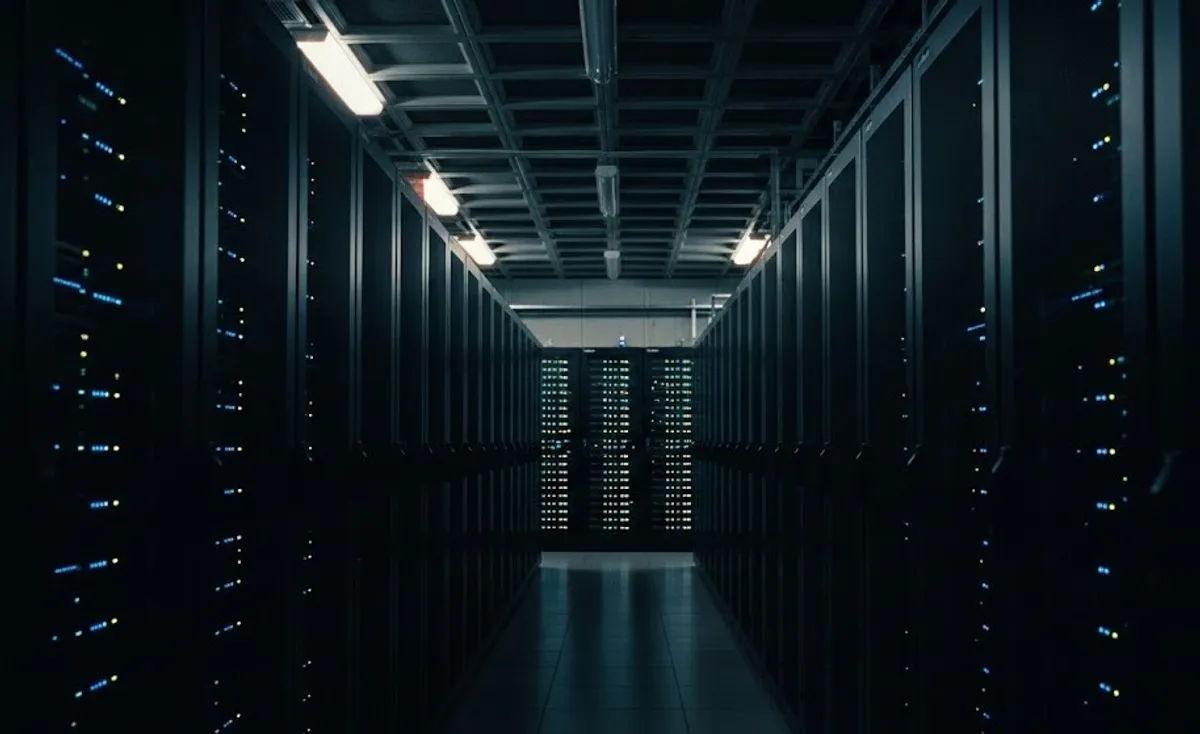
The massive data centers currently being erected by nation-states are not solely dedicated to training the next generation of Large Language Models. A significant portion of this infrastructure is acting as a passive vacuum, executing a strategy known as HNDL: Harvest Now, Decrypt Later.
Because raw storage has become statistically free at the state level, adversaries are indiscriminately logging petabytes of encrypted TLS and VPN traffic. They cannot read this data today, but they are stockpiling it on the mathematical certainty that computational limits will eventually fall.
This shifts the security paradigm. We are no longer protecting data from current exploits; we are racing against the expiration date of our own cryptography.
The Shelf-Life of a Secret and the Actuarial Math
In enterprise architecture, we must begin treating encryption not as an absolute shield, but as a degrading asset. The core metric is the delta between the Time-to-Crack and the Time-to-Irrelevance.
Not all data has a long shelf-life. If an adversary decrypts your Q1 2026 marketing strategy in 2036, the intelligence is worthless. The threat of HNDL applies specifically to data with an extended or permanent shelf-life:
- Biometric and Genomic Data: Fingerprints, retinal scans, and DNA profiles do not expire.
- Deep-Cover Identities: The operational history and identities of intelligence assets.
- Core Intellectual Property: Pharmaceutical formulas, weapon schematics, and proprietary source code.
If the shelf-life of your data exceeds the projected timeline for quantum viability, your current encryption is already a systemic liability.
The Illusion of Perfect Forward Secrecy (PFS)
For the past decade, the industry standard for secure communication has relied on Perfect Forward Secrecy (PFS), implemented via protocols like ECDHE (Elliptic Curve Diffie-Hellman Ephemeral). PFS ensures that even if a server’s long-term private key is compromised today, past sessions remain secure because unique, temporary keys were generated for each connection.
However, PFS only protects against the theft of the current key. It relies entirely on the mathematical difficulty of solving discrete logarithms. As we explored in our recent post, The Analog Ghost: Numbers Stations and the Architecture of Absolute Trust, modern cryptography is based on Computational Complexity.
When Shor’s Algorithm is successfully executed on a stable quantum computer, the difficulty of factoring primes and solving discrete logarithms collapses from millions of years to a matter of hours. The moment this threshold (often referred to as Q-Day) is crossed, the “Perfect” in Perfect Forward Secrecy evaporates, and every intercepted packet from the last twenty years becomes plaintext.
Beyond Primes: The Mathematics of PQC
To survive Q-Day, the industry is shifting to Post-Quantum Cryptography (PQC). The fundamental difference between traditional cryptography and PQC is the underlying math problem they ask a computer to solve.
Traditional algorithms (RSA, ECC) rely on the properties of prime numbers and elliptic curves. Quantum computers, leveraging superposition and entanglement, are uniquely engineered to find the hidden periodicity in these specific mathematical structures.
The newly finalized NIST PQC standards—specifically **FIPS 203 (ML-KEM / Kyber)**—abandon primes entirely. Instead, they rely on Lattice-Based Cryptography, specifically a problem known as Learning With Errors (LWE).
Imagine a multi-dimensional grid (a lattice) with thousands of intersecting points. The mathematical problem is finding the shortest vector (the closest intersection) to a specific point. If you introduce a small amount of mathematical “noise” (the errors) into the coordinates, finding the exact point becomes computationally impossible. Crucially, a quantum computer has no inherent advantage in solving a high-dimensional lattice problem over a classical computer; it gets just as lost in the “noise.”
The Execution Gap: Administrators vs. The Latency Tax
While the math is elegant, the implementation of PQC introduces massive architectural friction. Transitioning to ML-KEM is not a simple software update; it is a fundamental shift in network payload physics.
1. The Quantum Payload Bloat: Lattice-based cryptographic keys are massive. An ECC public key is typically 32 bytes. An equivalent ML-KEM public key is over 1,100 bytes. For a network administrator, this means the TLS handshake—the initial negotiation between a client and a server—is suddenly bloated. When key sizes exceed the Maximum Transmission Unit (MTU) of a standard network packet (typically 1500 bytes), the packet fragments. This fragmentation forces the network to reassemble packets, leading to increased CPU load on hardware load balancers, higher dropped-packet rates, and a measurable degradation in TTFB (Time to First Byte).
2. Cryptographic Discovery (The CBOM): Administrators cannot upgrade what they cannot see. Most enterprises have RSA and ECC hardcoded into legacy applications, proprietary appliances, and microservices. The immediate mandate for administrators is to generate a **Cryptographic Bill of Materials (CBOM)**—a complete audit of where and how encryption is executed across the stack.
3. The Hybridization Mandate: We cannot simply throw a switch to PQC. Doing so would instantly lock out any client that hasn’t updated its libraries. Administrators must deploy Hybrid Cryptography—combining a traditional algorithm (like X25519) with a quantum-resistant one (ML-KEM) within the same TLS handshake. This ensures compliance and quantum resistance, but it doubles the computational overhead on the server.
The End-User Impact: The Obsolescence of the Edge
For the end-user on a modern workstation or a flagship smartphone, the PQC transition will likely manifest as a negligible delay during secure connections. But for the edge of the network, PQC represents an extinction-level event.
The real victims of the PQC rollout will be IoT devices, embedded systems, and legacy hardware. A five-year-old smart TV, a SCADA controller in a manufacturing plant, or a network-connected medical monitor was engineered with just enough CPU and RAM to calculate an elliptical curve. These devices often lack the memory buffers required to store multi-kilobyte lattice keys or the processing power to execute the math within acceptable timeout windows.
As major tech providers (like Google Chrome and Cloudflare) begin enforcing hybrid ML-KEM connections by default, we will see a wave of “digital bricking.” End-users and facility managers will find that perfectly functional hardware is suddenly refused connection by modern servers, forcing a massive, global hardware replacement cycle driven entirely by the mathematical weight of the new standard.
Thought Exercise: The Socio-Economic Impact of Q-Day
As a thought exercise, we must consider the macro-level implications of Q-Day. What happens when the foundational mathematics of digital trust are retroactively broken?
The immediate threat is not a Hollywood-style hacking of the power grid, but rather a sudden, catastrophic collapse of historical privacy and systemic institutional failure.
1. The Weaponization of the Past (Blackmail at Scale): If twenty years of encrypted communications—private emails, corporate negotiations, legal strategies, and diplomatic cables—suddenly become plaintext, the geopolitical and corporate landscape will be paralyzed by retroactive exposure. Blackmail will transition from a targeted operation to an automated, algorithmic extraction of leverage against politicians, CEOs, and private citizens.
2. The Ledger Collapse: Cryptocurrencies and decentralized ledgers rely on elliptic-curve cryptography (specifically secp256k1 for Bitcoin). A sudden quantum break would allow an adversary to derive the private key from any public key that has exposed its signature to the network, effectively allowing the immediate draining of trillions of dollars in digital assets and triggering a localized financial collapse.
3. The Sovereign Digital Currency Trap (Telemetry vs. Resilience): While decentralized ledgers face an immediate mathematical threat, state-backed financial systems face a more insidious risk: Institutional Inertia.
There is a clear, legislative trajectory within the EU—heavily felt in Germany—to aggressively deprecate physical cash. While politicians maintain that cash will not be banned, an architectural audit of recent laws tells a different story. They are executing a phased deprecation by artificially maximizing the friction of the analog ledger:
- The EU AMLR (Anti-Money Laundering Regulation): Recently established a hard EU-wide cap of €10,000 for cash payments, while creating the new AMLA authority in Frankfurt to enforce digital oversight.
- Sanktionsdurchsetzungsgesetz II (Sanctions Enforcement Act II): In Germany, a nation historically fiercely protective of cash, the government outright banned the use of cash for real estate and land transactions.
- The Digital Euro: The ECB is transitioning from the preparation phase to the deployment of a Central Bank Digital Currency (CBDC), designed to be the primary legal tender for digital retail.
This is not a conspiracy; it is a structural desire for perfect financial telemetry. Governments and tax authorities (like the Zoll and Finanzamt) want a closed-loop system where tax evasion and the shadow economy are mathematically impossible.
However, state IT procurement and development cycles are notoriously inflexible, measured in decades rather than agile sprints. If a government forces its populace into a mandatory digital ledger secured by legacy cryptography, they are building a glass house on a fault line. When Q-Day hits, an inflexible state entity that lacks true crypto-agility will be unable to mathematically guarantee the integrity of its citizens’ wallets.
In this scenario, physical cash is not a tool for money laundering; it is an Offline, Decentralized, Quantum-Resistant Ledger. By eradicating it, the state is removing the only mathematically un-hackable disaster recovery mechanism the economy possesses.
4. The Return to the Analog: The push toward total digital reliance is a symptom of “peace-time engineering”—the assumption that the underlying math will always hold. In a post-Q-Day environment, digital trust will carry an inherent premium, leading to a bifurcation of infrastructure. General internet traffic will accept a baseline risk, but high-value intellectual property and sovereign wealth will revert to analog distribution. We will see a resurgence of “Zero-Tether” operations: highly sensitive data moved via bonded human couriers, and state communications returning to isolated, physical networks.
Ultimately, when the digital foundation breaks, physical isolation becomes the only verifiable metric of security. Cash, physical keys, and paper ledgers are not relics of the past; they are the ultimate disaster recovery plan for a mathematically compromised future.
Technical References & Fact Checks
- NIST PQC Standards: FIPS 203 (ML-KEM) and FIPS 204 (ML-DSA) Specifications. (NIST.gov, 2024).
- Lattice-Based Cryptography: Learning with Errors (LWE) and Post-Quantum Cryptography. (Regev, O., 2009).
- TLS Fragmentation: Benchmarking the impact of Post-Quantum Cryptography on TLS 1.3. (Cloudflare Research, 2023). Documenting the TTFB impact of MTU overflow.
- Shor’s Algorithm: Polynomial-Time Algorithms for Prime Factorization and Discrete Logarithms on a Quantum Computer. (Peter W. Shor, 1994).
- HNDL Threats: Preparing for Post-Quantum Cryptography. (CISA, 2024).
- EU Cash Limits: Regulation (EU) 2024/1624 (AMLR) on the prevention of the use of the financial system for the purposes of money laundering or terrorist financing (establishing the €10,000 limit).
- German Cash Bans: Sanktionsdurchsetzungsgesetz II (SDG II), effectively banning cash, crypto, and gold for real estate transactions in Germany to counter illicit financing.
- Digital Euro Trajectory: European Central Bank: Digital Euro Preparation Phase updates.